


Scalable Readiness Monitoring in Tactical Populations: From Elite Sport to the Fireground
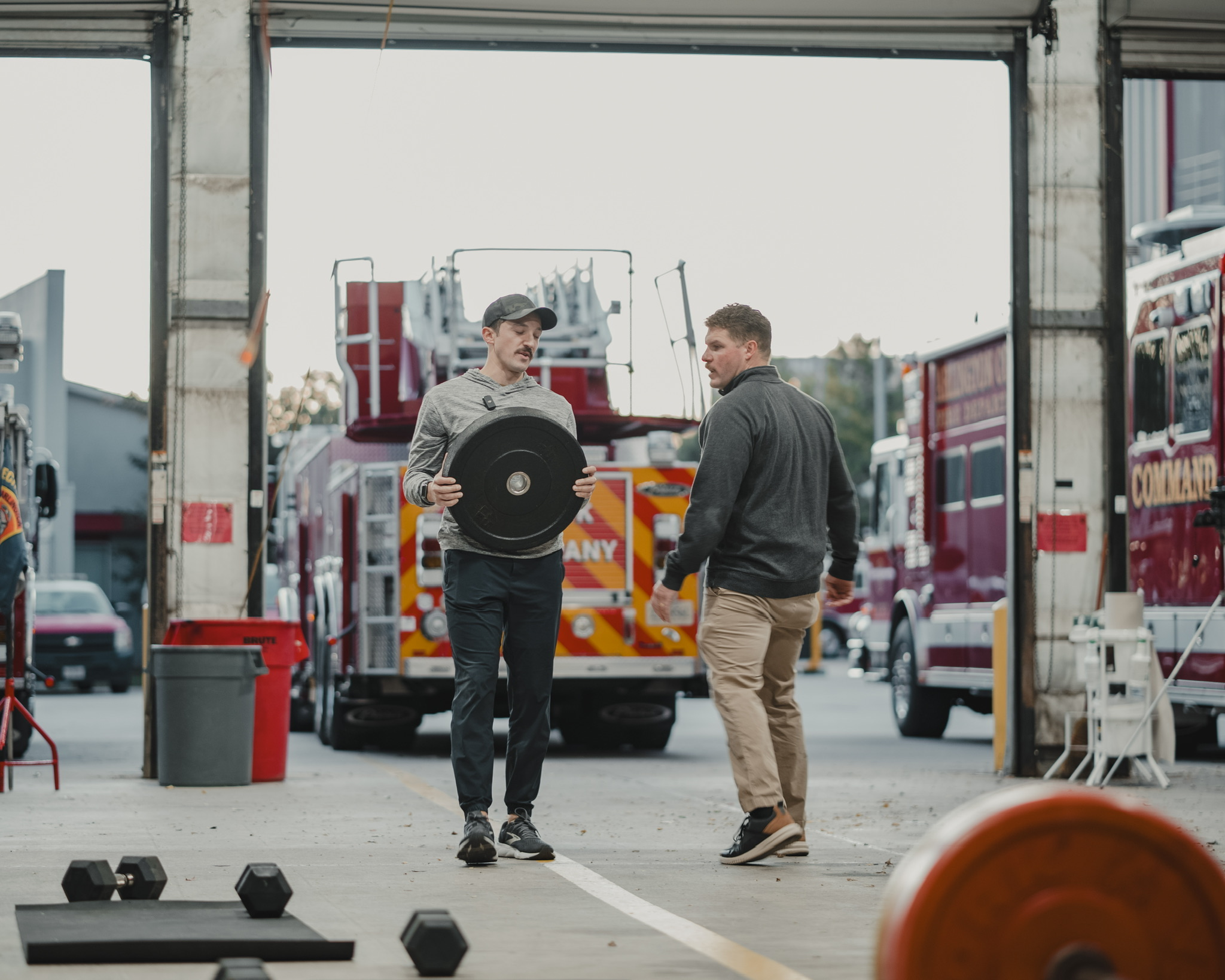
By Alex Redshaw, O2X Integrated Specialist - Arlington County Fire Department
The Origins of Readiness Monitoring in Sport
Readiness monitoring emerged in elite sport as coaches and sport scientists sought structured methods to manage training stress, reduce injury risk, and sustain high performance across long competitive seasons. Early approaches focused on workload tracking and overtraining prevention, but modern frameworks recognize readiness as a multifactorial state shaped by physical fatigue, psychological stress, sleep, and recovery (Bourdon et al., 2017).
Rather than eliminating fatigue, readiness monitoring aims to identify maladaptive trends early, allowing practitioners to adjust training before fatigue progresses into injury, burnout, or performance decline. Over the last decade, this model has expanded beyond sport into military, law enforcement, and fire service settings, where occupational demands often equal or exceed those of elite athletes (Rogers et al., 2021).
Subjective vs. Objective Monitoring
One of the most consistent findings in readiness research is that subjective self-reported measures are highly sensitive to training stress and recovery status.
A systematic review by Saw, Main, and Gastin (2016) found that self-reported metrics such as fatigue, soreness, mood, and stress were often more responsive to workload changes than physiological or biochemical markers. In many cases, individuals detect readiness shifts before objective performance declines become apparent.
Subsequent research confirms that subjective and objective metrics do not always align, but subjective measures provide meaningful insight when interpreted at the individual level rather than team averages (Thorpe et al., 2017; Van Wyk et al., 2025). This highlights the importance of personalized monitoring, especially in tactical populations with varied training backgrounds, fitness levels, and stress exposure.
In tactical environments, integrated monitoring approaches combining perceived fatigue, stress, and workload with physiological indicators such as heart rate variability (HRV) show promise (Rogers et al., 2021). HRV, in particular, has been identified as a useful indicator of cumulative stress and recovery capacity among first responders and military personnel (Michael et al., 2017).
The overarching conclusion across sport and tactical research is clear:
- No single readiness metric is sufficient.
- A blended approach combining perception and performance provides the most actionable insight.
Why Readiness Monitoring Matters in Tactical Populations
Tactical personnel face readiness challenges that differ from traditional athletic environments. Unlike competitive athletes, firefighters, military members, and law enforcement officers cannot control workload timing, competition schedules, or recovery opportunities. Shift work, sleep disruption, heat exposure, psychological strain, and unpredictable call volume create persistent cumulative stress (Rogers et al., 2021).
When implemented effectively, readiness monitoring in tactical populations supports:
- Reduced injury risk
- Improved training tolerance
- Earlier detection of overreaching and burnout
- More informed day-to-day training decisions
- Improved long-term occupational longevity
Wearable technology and performance testing continue to expand the ability to track readiness and injury risk, though implementation must balance value with operational feasibility (Seshadri et al., 2019).
Scaling Readiness Monitoring
The most effective readiness systems are not the most complex. They are the systems that can be executed consistently, sustainably, and at scale.
1. Ask and Observe
The most accessible readiness strategy is the one coaches have relied on for decades:
- Ask athletes how they feel
- Observe how they move, train, and perform
This informal approach can effectively identify individuals at performance extremes, but it has a key limitation: middle-of-the-pack performers are often overlooked. High performers draw attention. Struggling individuals trigger intervention. Meanwhile, subtle fatigue and performance decline in average performers may go unnoticed. Effectiveness also depends on the athlete-to-coach ratio and whether the coach has time to observe rather than actively instruct.
2. Structured Subjective Questionnaires
A scalable next step is the use of brief, structured subjective questionnaires, which provide standardized, low-burden insight into daily readiness. These commonly track:
- Fatigue
- Muscle soreness
- Stress
- Sleep quality
- Physical training RPE
- Operational RPE
- Free-text injury or concern notes
These tools are consistently supported as low-cost, time-efficient, and highly sensitive to readiness changes, particularly in large populations where objective testing capacity may be limited (Saw et al., 2016; Thorpe et al., 2017).
Fatigue: Impacts on Performance, Cognition, and Skill Acquisition
Fatigue is more than physical tiredness. It directly affects force production, reaction time, coordination, and movement efficiency, increasing injury risk and degrading task performance (Bourdon et al., 2017).
Fatigue also impairs cognitive performance, including attention, working memory, decision-making, and information retention. In tactical training environments, high fatigue can reduce the ability to process instruction, retain coaching cues, and execute complex skills under pressure (Rogers et al., 2021). Training in excessive fatigue may also reinforce suboptimal movement patterns and slow motor learning.
Monitoring fatigue allows practitioners to adjust training intensity, volume, and instructional demands, ensuring high-skill or cognitively demanding sessions occur when trainees are best positioned to learn and perform.
RPE and Acute:Chronic Workload Ratio (ACWR)
Rating of Perceived Exertion (RPE) is one of the most scalable tools for quantifying internal training load, particularly when physiological monitoring is not feasible.
By multiplying session RPE by session duration, practitioners can estimate workload and track trends over time. These data can be used to calculate the Acute:Chronic Workload Ratio (ACWR), comparing short-term training load to longer-term workload exposure.
An ACWR of approximately 0.8-1.3 is commonly cited as a target range associated with adequate stimulus for adaptation while minimizing maladaptive workload spikes. Ratios below this range may indicate underloading, while ratios above it may reflect rapid workload increases linked to elevated injury risk (Bourdon et al., 2017).
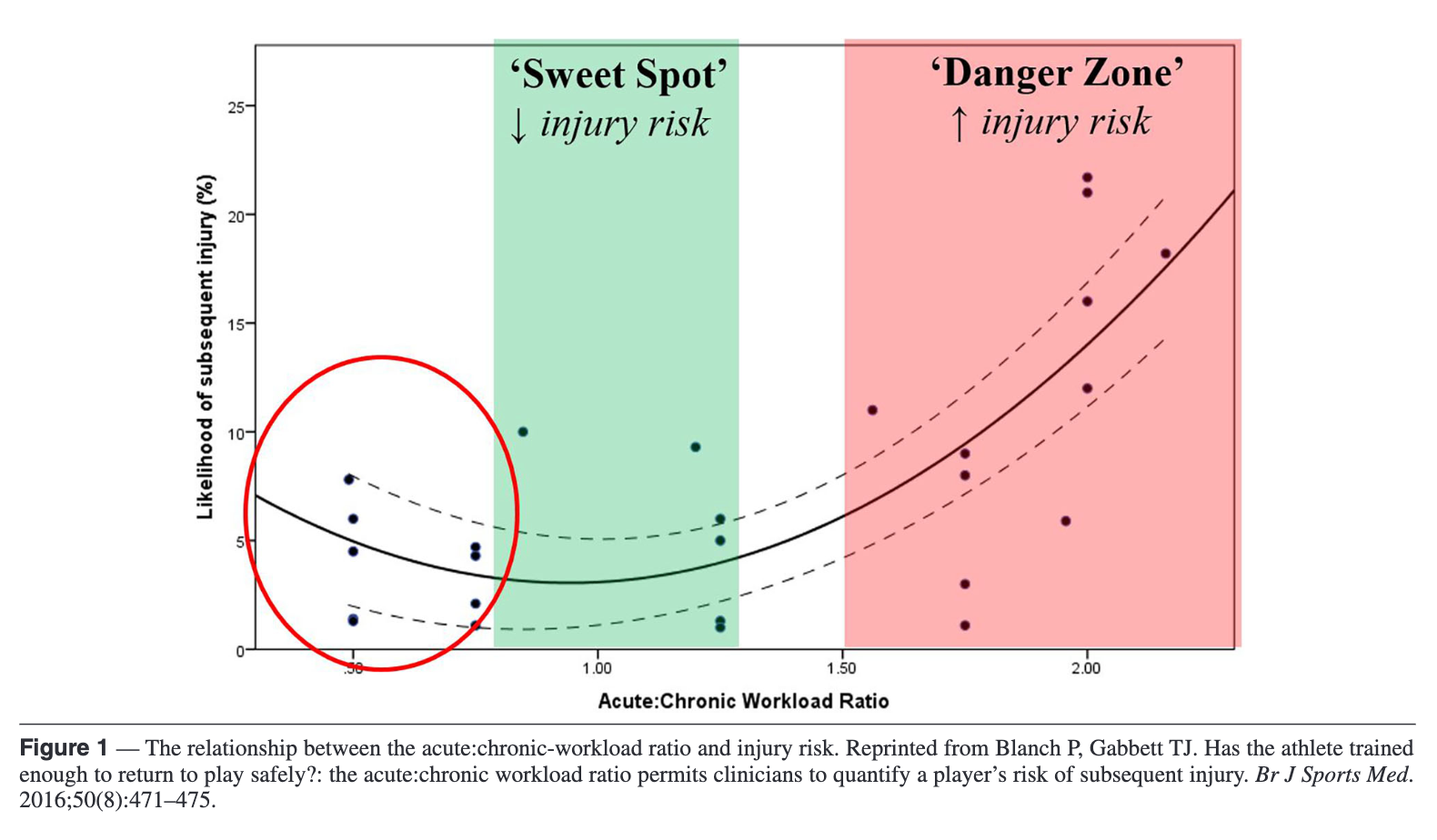
RPE also helps identify mismatches between planned training intensity and perceived effort. If sessions intended to be moderate are consistently rated as highly strenuous, this may indicate inadequate recovery, accumulated fatigue, or misaligned programming. Because RPE reflects individual internal load, it is especially valuable in heterogeneous tactical cohorts, where identical external workloads may impose very different levels of strain.
3. Pairing Subjective Feedback with Objective Performance Testing
When feasible, readiness monitoring becomes more powerful when subjective perception is paired with objective performance data.
This pairing allows practitioners to identify discrepancies such as:
- Feeling poor but performing well, suggesting psychological or emotional strain
- Feeling good but performing poorly, suggesting hidden fatigue or recovery debt
- Alignment between perception and performance, strengthening confidence in decisions
This is a nuanced decision space. Perception is reality, and even if objective readiness appears strong, individuals who feel exhausted may underperform or disengage (Van Wyk et al., 2025). Objective data should therefore inform, not override, subjective experience.
An Applied Tactical Model for Scalable Monitoring
In tactical environments, readiness systems must balance scientific rigor with operational practicality. A scalable model may include:
- Daily subjective questionnaires tracking fatigue, soreness, stress, training RPE, operational RPE, and narrative injury notes
- Weekly objective testing, such as force-plate assessments measuring Reactive Strength Index (RSI) and jump momentum
- Trend-based interpretation, rather than reacting to single-day fluctuations
Objective testing at the start and end of the training week can reveal how tactical athletes adapt to workload across training microcycles. When paired with daily self-report data, this approach supports early detection of accumulating fatigue, under-recovery, emerging injury risk, and readiness trends (Bourdon et al., 2017; Rogers et al., 2021).
The Bottom Line: Readiness Monitoring Must Be Practical to Be Effective
The best readiness system is not the most technologically advanced. It is the one that:
- Can be implemented consistently
- Is trusted by leadership and participants
- Produces actionable insights
- Scales across large tactical populations
From elite sport to tactical performance, the evidence supports a simple principle:
Start simple. Trust your athletes. Track consistently. Know what you’re looking for. Let it open the door to important conversations.
Even minimal readiness monitoring is better than none. When applied thoughtfully, it can meaningfully reduce injury risk, enhance performance, and extend careers in physically demanding professions.
References:
- Bourdon, P. C., Cardinale, M., Murray, A., Gastin, P., Kellmann, M., Varley, M. C., Gabbett, T. J., Coutts, A. J., Burgess, D. J., Gregson, W., & Cable, N. T. (2017). Monitoring athlete training loads: Consensus statement. International Journal of Sports Physiology and Performance, 12(S2), S2-161–S2-170. https://doi.org/10.1123/IJSPP.2017-0208
- Michael, S., Graham, K. S., & Davis, G. M. (2017). Cardiac autonomic responses during exercise and post-exercise recovery using heart rate variability and systolic time intervals. European Journal of Applied Physiology, 117(10), 1971–1980. https://doi.org/10.1007/s00421-017-3690-z
- Rogers, S. C., Scudamore, E. M., Gardner, A. J., & Reilly, T. (2021). Monitoring fatigue, recovery, and performance in tactical populations: A systematic review. Healthcare, 9(10), 1303. https://doi.org/10.3390/healthcare9101303
- Saw, A. E., Main, L. C., & Gastin, P. B. (2016). Monitoring the athlete training response: Subjective self-reported measures trump commonly used objective measures. British Journal of Sports Medicine, 50(5), 281–291. https://doi.org/10.1136/bjsports-2015-094758
- Seshadri, D. R., Li, R. T., Voos, J. E., Rowbottom, J. R., Alfes, C. M., Zorman, C. A., & Drummond, C. K. (2019). Wearable sensors for monitoring the internal and external workload of the athlete. NPJ Digital Medicine, 2(1), 71. https://doi.org/10.1038/s41746-019-0149-2
- Thorpe, R. T., Strudwick, A. J., Buchheit, M., Atkinson, G., Drust, B., & Gregson, W. (2017). The influence of changes in acute training load on daily sensitivity of morning measured fatigue variables in elite soccer players. International Journal of Sports Physiology and Performance, 12(S2), S2-107–S2-113. https://doi.org/10.1123/IJSPP.2016-0433
- Van Wyk, P., Lambert, M. I., & Taylor, K. L. (2025). Associations between subjective wellness and objective training metrics at the individual athlete level. Sports Medicine – Open, 11(1), 24. https://doi.org/10.1186/s40798-025-00958-y
About O2X Integrated Specialist Alex Redshaw:
Alex Redshaw is an O2X On-Site Human Performance Specialist specializing in Strength and Conditioning with the Arlington County Fire Department. In this role, he designs and implements fitness programs tailored to the demands of firefighting, with a focus on enhancing operational readiness, movement quality, injury prevention, and long-term health for first responders.
Prior to joining O2X, Alex served as the Functional Fitness Coordinator for the South Australian Metropolitan Fire Service (SAMFS), where he developed and delivered comprehensive health and wellness programs, including fitness assessments, strength and conditioning sessions, and health education for firefighters. He also previously worked in elite sport, serving as Head Strength and Conditioning Coach for the University of South Australia Women’s Soccer Team and Assistant Strength and Conditioning Coach for Basketball South Australia, where he designed evidence-based training programs and mentored interns supporting elite junior athletes.
Originally from Australia, Alex earned a Bachelor of Exercise and Sport Science and completed a Master of Research (Health Sciences) through a scholarship with SAMFS. His research, focused on movement quality in aging firefighters, reflects his commitment to optimizing performance and durability in tactical populations. A former competitive athlete in cricket and Australian Rules Football, Alex moved to the United States in 2023 and continues to bring a strong community health and performance focus to his work.